


Small SUVs Not the Best on Some Crash Avoidance
Front-to-rear crashes with motorcycles, large trucks show crash-prevention tech less effective in those scenarios.

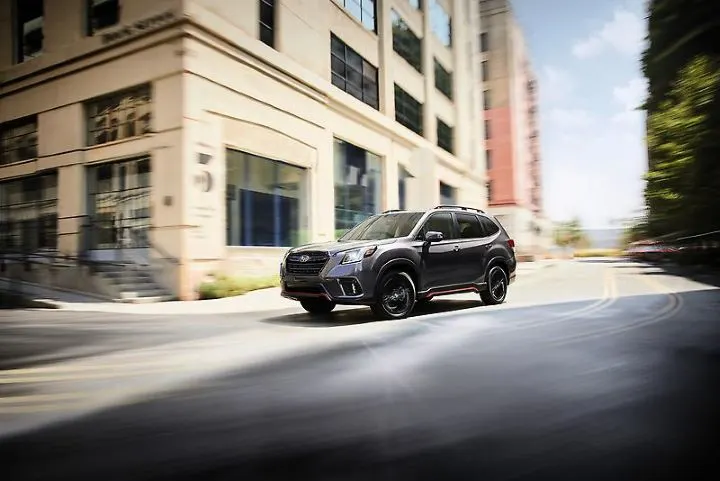
The Subaru Forester is the only small SUV to so far receive a good rating in the updated crash test.
Subaru
A newly updated crash test shows many small sports-utility vehicles fail to perform well in what the tester considers some of the most dangerous accidents.
The revised front crash-prevention test evaluates accidents that result in motorcycles and large trucks being struck because research shows current technology is less effective at preventing crashes with those types of vehicles.
The Insurance Institute for Highway Safety toughened the test of front-to-rear crashes in its recent update by conducting high-speed evaluations. The original crash tests were at low speeds because they evaluated what was still relatively new technology.
The nonprofit testing organization says automatic emergency braking prevents up to half of front-to-rear accidents but that the particular risks in crashes involving motorcycles and large trucks warrant close attention.
“Obviously, crashes that happen at higher speeds are more dangerous,” said IIHS Senior Research Scientist David Kidd, who led the development of the new evaluation. “Deadly underride crashes often occur when the struck vehicle is a large truck, and motorcyclists are frequently killed when they’re rear-ended by a passenger car, since their bike offers no protection from the impact.
When it comes to small SUVs, just one of 10 2023 and 2024 models IIHS tested so far got a good rating in the crash tests – the Subaru Forester. The Honda CR-V and Toyota RAV4 received acceptable ratings; the Ford Escape, Hyundai Tucson and Jeep Compass marginal ratings; and the Chevrolet Equinox, Mazda CX-5, Mitsubishi Outlander and Volkswagen Taos poor.
Originally posted on Auto Dealer Today
More Industry

Charger Network Growth Slows
Despite a projected increase in public EV chargers in 2026, charging infrastructure remains a top concern for consumers as the gap between the most and least EV-friendly places remains substantial.
Read More →
Lenders, Consumers Take on More Auto Loan Risk
September records loosened credit access the most in over a decade as buyers took advantage of the conditions to afford trading, though loan applications fell.
Read More →
Next-Gen Hybrids in Sight
Dealerships can expect to see revamped hybrids from Honda next year as the company rolls out a new system and model lineup.
Read More →
Gem State Stores Change Hands
A larger auto group founded in the industry’s early years sold two franchises to a neighbor group that's on a growth spurt.
Read More →
Charging In Motion
Honda has been researching wireless in-motion charging for electric vehicles since 2025, and new technology developments have put it a step closer to a final product.
Read More →
Twin Cities Stores Sell
Minnesota-based Walser Automotive Group made what it called the most significant acquisition in its history with a three-rooftop deal in Minneapolis.
Read More →
U.S. Auto Sales Still Below Prepandemic Levels
Mobility Global industry observers don’t expect the market to return to the higher volumes that became routine before Covid but to stay well below its potential.
Read More →
The Powertrain Shift
Electric-vehicle owners are backpedaling, according to new data, with product availability driving many to shift back to gas-powered engines.
Read More →
Achromatic Autos
The shades that dominate the U.S. car market don’t call attention to themselves, though grayscale may have plateaued after a 30-year upswing, research shows.
Read More →
Used-Vehicle Affordability Worsens
Listing prices in August defied seasonal trends, rising above $27,000 for the second time this year.
Read More →