


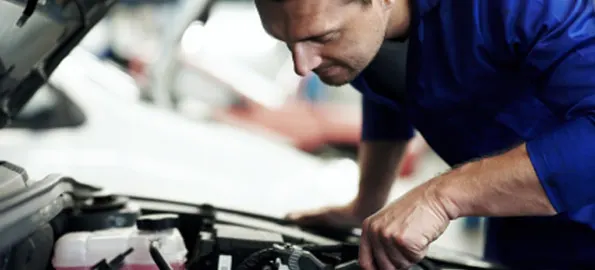
Vehicle Technology Creates Rate Uncertainty in VSCs

Vehicle Technology Creates Rate Uncertainty in VSCs
Vehicle technology can be defined in a number of different ways, each of which can have a different impact on the vehicle service contracts (VSCs). We spoke to a few VSC providers to get their take on the subject, but first we had to define the technology.
For this article, it’s actually going to be defined in two ways. First, as the technology that surrounds the engine, from the components themselves, to the technology used to drive them and make them more efficient. And second, as the consumer-facing technologies, such as GPS systems, flat panel displays, or DVD/infotainment systems.
With that in mind, how does technology impact the VSC? The short answer, surprisingly, is that it doesn’t. Across the board, providers noted that while they might not cover everything in their lower-end contracts, when it comes to the exclusionary versions, nothing is off the table. In a few cases, there are additional surcharges specifically for hybrid vehicles, with their advanced engine technologies, but the providers themselves were split as to whether that was a necessary addition or not.
Their bigger concern, rather than look at whether to cover or not, centered more on the uncertainty behind the rates. “My biggest concern is us not having any idea how to properly rate the contract until we know how those components will hold up,” said Kelly Price, president, National Automotive Experts. “We don’t want to raise rates if don’t have to, but we will all be caught off guard if these become problematic. But that will be everyone, because no one knows how to rate them.”
Alan Bond, vice president, National Sales, GSFSGroup, agreed, noting that technology items — of both types — have a low frequency of failure at this point in time. But when they do fail, it’s a very high cost for the consumer to replace. Part of the problem, he and others noted, is that many of these systems are new, and still in their manufacturer warranty. So no one really knows, ultimately, what the fail rate or replacement costs will be down the line. “That means we have to be more diligent on the loss side to keep an eye on claims, to make sure contracts priced appropriately, taking those items into account,” he noted.
“What you need to find out from our point of view is how to price the product correctly,” agreed Curt Johnson, senior product, risk & compliance manager, NAC. “We need to see how the failures are going to occur or when they will occur with new technologies.”
From the actuary side of things, all this technology is a good thing, noted Lee Bowron, partner, Kerper Bowron. “From a real fundamental perspective, to the extent that you’re moving away from fuel and liquid based stuff, the electric is good. There are less moving parts, and those parts seem to last longer in general.”
But, Bowron noted, he sees the same issues the providers do — namely that no one really has anything more than a good guess as to how often these parts will fail, and how much it will cost to repair them. “It takes a while to work through the system,” he noted. “OEMs introduce these technologies, then they have to break, then it has to get outside the manufacturers warranty to get any real data. So it’s difficult. Everyone just sort of has fingers crossed. In the future, I believe a lot of those things will go from being a luxury surcharge to being part of the exclusionary coverage [in cases where it’s not already] because it’s so pervasive. These technologies are getting to the point where it’s not a special upgrade to the vehicle.”
Right now, Bowron noted, most of those surcharges are either around the hybrid vehicles, or for things that aren’t necessarily integrated into the vehicle. As more and more systems like GPS become standard, integrated systems, he sees it as being a moot point. What he does see as remaining excluded are things like the batteries. Starter batteries right now aren’t covered even in most exclusionary policies, but hybrid batteries, he noted, are expensive to replace — but also last for quite some time. So this is one area he’s keeping an eye on.
“We in our industry evolve based on manufacturer,” said Johnson. “As they become more technically advanced, we have to match with them stride for stride. Service contracts 20 years ago were power train or powertrain plus, but there weren’t many electronic components. But its nearly impossible today to find a car without power windows or locks today, that were a luxury then. So the things that are luxury items today, like WiFi hotspots, in another 20 years will be common. It is moving fast, it’s based on the consumer and what they want. As long as they have thirst for technology that makes their life easier, we as service contract providers will need to match that.”
More Product & Technology

Set Yourself Apart
Product providers can follow the lead of industry cohorts in the practice of leveraging their brands through private labeling, pumping new energy into their platforms to stand out from competitors.
Read More →
EVs Excel at Longevity
Research finds that after a certain mileage point, they outlast gas and diesel vehicles despite being driven more.
Read More →
Integrating AI Into Your Admin System
It’s important for finance-and insurance administrators to build the technology into their existing systems instead of bolting it on.
Read More →
Public EV Charging Improves
The infrastructure buildout in the U.S. is providing more availability and safety at a better cost, according to the latest EV experience study by JD Power.
Read More →
AI in the Dealership
A Cox Automotive poll shows most dealers use it, but only some have found the smartest ways to adapt the surging technological sensation.
Read More →
AAA Honors Service and Repair Facilities
Three automotive dealerships made AAA's Service Providers of Excellence and Best in Repair list this year.
Read More →
EFG Launches Product Admin Platform
The company says the offering is designed to empower administrators, service contract providers, and product marketers to expand automotive and power-sports capabilities.
Read More →
Optimized Charging Could Reduce Costs
According to an Alliance for Automotive Innovation analysis, optimized EV charging could cut costs for drivers and improve grid infrastructure - potential adoption incentives.
Read More →
From Inspection to Impact
Data, video and artificial intelligence are driving service performance today, when inspection performance is closely tied to key business outcomes.
Read More →
Car Karaoke Gets Official Platform
The in-vehicle karaoke and sing-along platform by Samsung arm is meant to add traveling enjoyment safely in technology that automakers can tailor to their specific needs.
Read More →