


Automakers Urge Congress to Lift EV Tax Credit Cap
Automakers have urged Congress to lift a cap on the $7,500 electric vehicle tax credit.

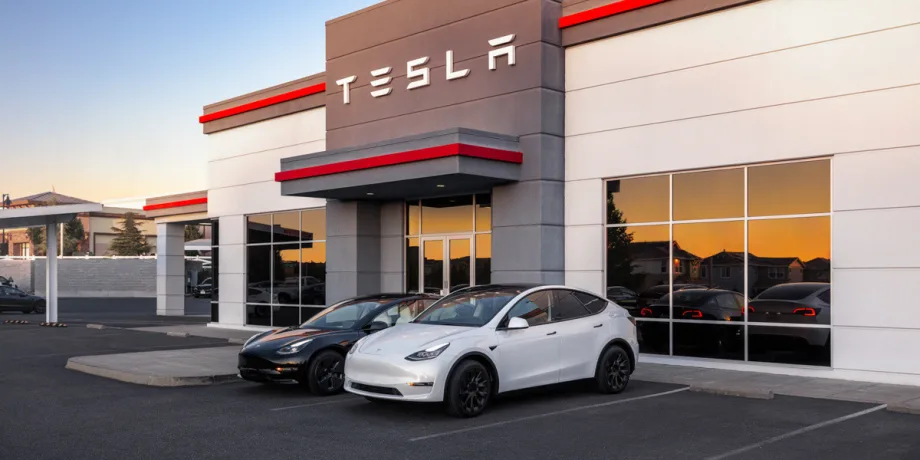
Tesla EVs are no longer eligible for the consumer tax credits.
Tesla
General Motors Co, Ford Motor Co, Chrysler-parent Stellantis NV and Toyota Motor North America have urged Congress to lift a cap on the $7,500 electric vehicle tax credit, citing higher costs to produce zero-emission vehicles in a letter.
The joint letter from the automakers’ CEOs stressed they have pledged to invest over $170 billion through 2030 to aid in EV development, production and sale.
But the current $7,500 tax credit phases out after a manufacturer hits 200,000 vehicles sold. GM and Tesla are no longer eligible for the consumer tax credits. Toyota reported its credits will expire by the end of 2022 after it hits the cap. Ford also will hit the cap
this year.
"We ask that the per-(automaker) cap be removed, with a sunset date set for a time when the EV market is more mature," the automakers said in the letter. "Recent economic pressures and supply chain constraints are increasing the cost of manufacturing electrified vehicles which, in turn, puts pressure on the price to consumers."
Automakers fear the window of opportunity for the U.S. Congress to extend EV tax credits will close if Republicans take over the Senate and the House in mid-term elections.
Not everyone agrees with the need to extend the cap. In April, Sen. Joe Manchin questioned the need to extend electric vehicle tax credits, citing strong consumer demand and Chinese production of battery components.
"There's a waiting list for EVs right now with the fuel price at $4. But they still want us to throw $5,000 or $7,000 or $12,000 credit to buy electric vehicles. It makes no sense to me whatsoever," Manchin said. "When we can't produce enough product for the people that want it and we're still going to pay them to take it -- it's absolutely ludicrous in my mind."
In 2021, the Biden Administration proposed hoisting EV tax credits to $12,500 -- including a $4,500 incentive for union-made, U.S. assembled vehicles.
Manchin also opposed the union-only incentive, as did Toyota.
President Biden also backed a 30% credit for commercial electric vehicles, a $4,000 used EV tax credit, and phasing out credits for EVs manufactured outside the United States.
Originally posted on Auto Dealer Today
More Industry

Charger Network Growth Slows
Despite a projected increase in public EV chargers in 2026, charging infrastructure remains a top concern for consumers as the gap between the most and least EV-friendly places remains substantial.
Read More →
Lenders, Consumers Take on More Auto Loan Risk
September records loosened credit access the most in over a decade as buyers took advantage of the conditions to afford trading, though loan applications fell.
Read More →
Next-Gen Hybrids in Sight
Dealerships can expect to see revamped hybrids from Honda next year as the company rolls out a new system and model lineup.
Read More →
Gem State Stores Change Hands
A larger auto group founded in the industry’s early years sold two franchises to a neighbor group that's on a growth spurt.
Read More →
Charging In Motion
Honda has been researching wireless in-motion charging for electric vehicles since 2025, and new technology developments have put it a step closer to a final product.
Read More →
Twin Cities Stores Sell
Minnesota-based Walser Automotive Group made what it called the most significant acquisition in its history with a three-rooftop deal in Minneapolis.
Read More →
U.S. Auto Sales Still Below Prepandemic Levels
Mobility Global industry observers don’t expect the market to return to the higher volumes that became routine before Covid but to stay well below its potential.
Read More →
The Powertrain Shift
Electric-vehicle owners are backpedaling, according to new data, with product availability driving many to shift back to gas-powered engines.
Read More →
Achromatic Autos
The shades that dominate the U.S. car market don’t call attention to themselves, though grayscale may have plateaued after a 30-year upswing, research shows.
Read More →
Used-Vehicle Affordability Worsens
Listing prices in August defied seasonal trends, rising above $27,000 for the second time this year.
Read More →