


SAAR Dips to 16.6M in Watershed Sales Report
July deliveries increased 1.3% in the first monthly U.S. new-vehicle sales report to include none of the Detroit 3 automakers, but the seasonally adjusted annualized rate fell below 17 million for the fourth time this year.

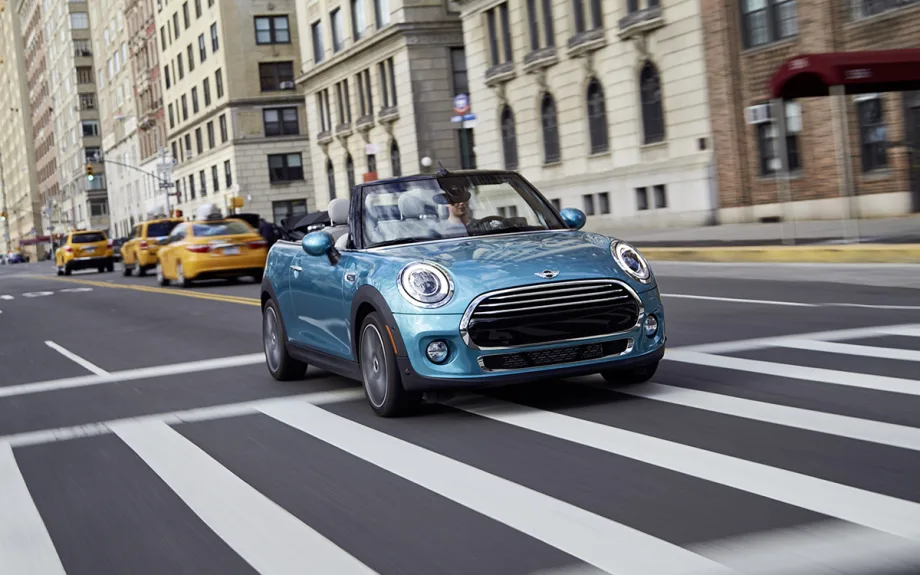
Mini was one of only three manufacturers to record a year-over-year decrease in the latest U.S. new-vehicle sales report, delivering fewer than 3,000 units in July for a 34.2% decline. Each of the Detroit 3 factories declined to report monthly sales for the first time.
Photo courtesy Mini USA
(Bobit) — The seasonally adjusted annualized rate of U.S. new-vehicle sales fell below 17 million for the fourth month of the year so far in July, registering at 16.6 million after climbing to 17.29 million in June.
The July sales figures, based on data compiled by Automotive News, show deliveries increased 1.3% nationwide compared with the same month a year ago. But it is the first such report that excludes the Detroit 3 entirely, with Ford and Fiat Chrysler following General Motors’ example by switching to quarterly releases.
“The absence of companies representing 45% of U.S. sales will undercut the value of the monthly data as a barometer of the industry’s health,” AN’s David Phillips wrote.
Among mass-market manufacturers, Hyundai set the pace with a 12% year-over-year improvement, completing a 12-month run of monthly sales increases. Subaru extended its own streak to 92 months, growing sales by 7.9% in July. They were followed in the winners’ column by Toyota (3.6%), Volkswagen (2.2%), Honda (1.9%), and Kia (0.6%).
Each of the major highline marques showed improvement as well, led by Genesis (158%), Porsche (23%), and Jaguar (7.4%). Modest gains were reported by BMW (4.7%), Land Rover (4%), Volvo (2%), and Audi (0.8%).
Another source, Inside EVs, estimated U.S. Tesla sales totaled 15,650 units in July, which would be a 30.4% improvement from June.
Factories seeing declines included Mini (-34%), Mitsubishi (-13%), and Nissan (-9.1%). Nissan has ratcheted down incentives for buyers while remaining highly aggressive on lease deals.
In a statement, Cox Automotive’s chief economist, Charlie Chesbrough, said the report reflected the firm’s own forecasts.
“Clearly, the market remains on solid ground and buyers are still in the new-car market even with higher prices,” Chesbrough wrote. “Strong sales of some small cars may suggest that affordability shoppers have not entirely abandoned the new-vehicle market. Given the strength of used-vehicle prices, and supply constraints limiting selection, more interest in lower-priced new vehicles is not surprising.”
Autotrader’s Michelle Krebs concurred, noting surging interest in small cars on dealer sites. “That suggests some consumers are looking for affordability and finding it in small cars, a market largely abandoned by Detroit’s automakers. As a result, sales for the two best-selling compact — Toyota Corolla and Honda Civic — were up double digits in July (15% for Corolla and 11% for Civic) to about 30,000 units each.”
Conversely, the gains enjoyed by Honda, Hyundai, and Subaru are largely credited to larger vehicles, noted Stephanie Brinley of IHS Markit.
“Mercedes-Benz and BMW are also seeing sales improve from updated or all-new utility vehicles,” said Brinley, IHS’s principal automotive analyst. “Many of these, like the Hyundai Palisade, Honda Passport, and BMW X7, put the brands in new segments with a product that enables them to counter the slowdown in their more traditional sedan lineups.”
Industrywide, J.D. Power estimates per-unit incentive spending grew 5.8% to $4,074 month-over-month. ALG analysts say average incentives declined by 2.6% to $3,671, with Kia (-17.8%), Toyota (-9.3%), Subaru (-9.1%) among the chief culprits.
Edmunds reports the average interest rate for a new-vehicle loan fell to 5.8% in July, a new low for 2019, with 35% of all new-car buyers securing a sub-4% interest rate, up from 31% in June.
To read the full Automotive News report, click here.
Originally posted on Auto Dealer Today
More Industry

Charger Network Growth Slows
Despite a projected increase in public EV chargers in 2026, charging infrastructure remains a top concern for consumers as the gap between the most and least EV-friendly places remains substantial.
Read More →
Lenders, Consumers Take on More Auto Loan Risk
September records loosened credit access the most in over a decade as buyers took advantage of the conditions to afford trading, though loan applications fell.
Read More →
Next-Gen Hybrids in Sight
Dealerships can expect to see revamped hybrids from Honda next year as the company rolls out a new system and model lineup.
Read More →
Gem State Stores Change Hands
A larger auto group founded in the industry’s early years sold two franchises to a neighbor group that's on a growth spurt.
Read More →
Charging In Motion
Honda has been researching wireless in-motion charging for electric vehicles since 2025, and new technology developments have put it a step closer to a final product.
Read More →
Twin Cities Stores Sell
Minnesota-based Walser Automotive Group made what it called the most significant acquisition in its history with a three-rooftop deal in Minneapolis.
Read More →
U.S. Auto Sales Still Below Prepandemic Levels
Mobility Global industry observers don’t expect the market to return to the higher volumes that became routine before Covid but to stay well below its potential.
Read More →
The Powertrain Shift
Electric-vehicle owners are backpedaling, according to new data, with product availability driving many to shift back to gas-powered engines.
Read More →
Achromatic Autos
The shades that dominate the U.S. car market don’t call attention to themselves, though grayscale may have plateaued after a 30-year upswing, research shows.
Read More →
Used-Vehicle Affordability Worsens
Listing prices in August defied seasonal trends, rising above $27,000 for the second time this year.
Read More →